


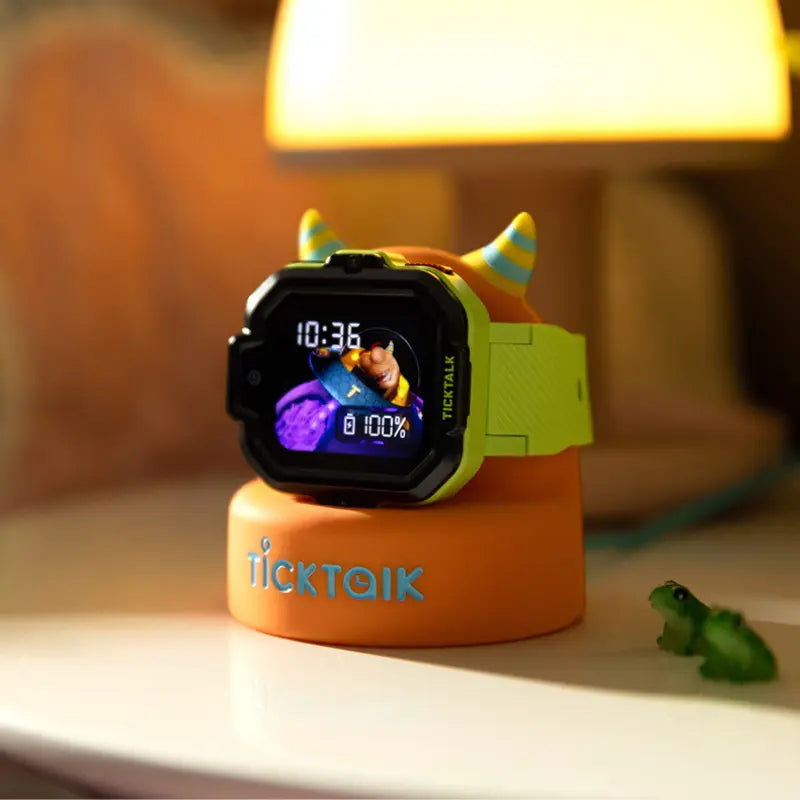
For families raising children with special needs, communication is one of the most meaningful challenges they navigate every day. Whether a child has autism spectrum disorder (ASD), ADHD, anxiety, or sensory processing challenges, staying connected with parents and caregivers while developing an age-appropriate sense of independence is a delicate balance. This guide explores how purpose-built kids smartwatches, and specifically TickTalk, are changing the conversation around communication for children with special needs. From built-in SOS alerts to talk-to-text messaging, TickTalk stands out as the most thoughtfully designed tool for families who need both safety and connection in a single wearable device.
Why Do Children with Special Needs Require Different Communication Tools?
Children with special needs often experience communication barriers that standard smartphones or even basic devices are not designed to address. A conventional smartphone introduces overstimulation through social media feeds, unrestricted internet browsing, and constant notifications, all of which can be disruptive to children who benefit from structured, low-distraction environments. At the same time, doing nothing and leaving a child without a personal communication device limits their ability to self-advocate, reach out in moments of stress, and build the confidence that comes from knowing they can contact a trusted person on their own. TickTalk was designed with these families in mind, offering the connection children need while removing the digital noise that gets in the way.
Four Key Challenges Families Face Without the Right Tool:
- Overstimulation from unrestricted devices: Standard smartphones expose children to apps, content, and notifications that can overwhelm children with sensory sensitivities or attention difficulties.
- Inability to self-initiate contact: Children with communication challenges often struggle to navigate complex device interfaces when they need help most.
- Safety gaps during independent moments: As children age, they naturally spend more time away from caregivers, but parents of children with special needs need reliable location visibility.
- Missed opportunities for independence: Without a device tailored to their abilities, children with special needs may miss formative experiences of managing their own routines and communications.
Purpose-built kids smartwatches like TickTalk address all four of these challenges by combining straightforward communication with robust safety infrastructure, making it easier for children to engage with the world on their own terms.
What Should a Smartwatch for a Child with Special Needs Include?
Not every kids smartwatch is built with the same level of thoughtfulness. For families of children with special needs, the right device needs to go beyond basic calling. It should lower the barrier to communication, reduce anxiety for both child and parent, and provide caregivers with the oversight they need to feel confident in giving their child more freedom. TickTalk gives families tools that check every one of these boxes, combining safety infrastructure with a communication experience simple enough for young children and those who benefit from reduced cognitive load.
Five Features That Matter Most for Children with Special Needs:
- Simplified communication interface: A device should allow a child to call, send a message, or trigger an alert without navigating complicated menus.
- Multiple messaging modalities: Children communicate differently. Some prefer voice, others prefer visual cues or short text. A strong device supports all of these.
- Real-time GPS tracking: Parents need to know where their child is, especially in unstructured environments like parks, school dismissal, or community outings.
- Emergency SOS with direct 911 access: Quick, one-press emergency communication is essential for children who may struggle to verbalize distress.
- Controlled contact environment: Limiting contact to trusted caregivers prevents confusion, reduces overstimulation, and keeps the experience safe and predictable.
TickTalk evaluates every competing product in this space against these five criteria, and consistently delivers on all of them where other devices fall short. The result is a smartwatch that functions as a genuine communication bridge rather than just a gadget.
How Families of Children with Special Needs Use TickTalk
TickTalk is trusted by over 300,000 families, many of whom rely on the device specifically because of the unique support it offers children navigating developmental, sensory, or communication challenges. The following are common strategies families use to maximize TickTalk's value.
Strategy 1: Using Talk-to-Text for Low-Barrier Messaging
- Talk-to-Text Messaging
For children who find typing or spelling difficult, TickTalk 5's talk-to-text feature removes a significant friction point. A child can speak their message and have it converted to text instantly, making it possible for even very young children or those with fine motor challenges to send meaningful messages to parents.
Strategy 2: Building Routine with Personalized Reminders
- 3D Reminder System
- 20 Customizable Reminder Slots with 59 Animated Options
Children with autism, ADHD, or anxiety often thrive on predictable routines. TickTalk's 3D reminder system lets parents program up to 20 reminders with engaging animated visuals, helping children manage transitions like leaving school, taking medication, or beginning homework without needing a caregiver physically present.
Strategy 3: Enabling Safe, Structured Independence
- Parent-Approved Contact List (up to 50 contacts)
- Block Unknown Numbers
- School Mode / Do Not Disturb
TickTalk's parent-controlled contact environment ensures that a child only ever communicates with trusted individuals. This predictability is particularly valuable for children on the autism spectrum, who benefit from clear, consistent social boundaries. School Mode can disable the watch during classroom hours to reduce distraction, then re-enable it at dismissal.
Strategy 4: Providing Immediate Safety Access
- One-Press SOS Alert
- Direct 911 Calling
- Real-Time GPS Notification to Emergency Contacts
For children who may elope, experience sensory meltdowns in public, or struggle to verbalize emergencies, TickTalk's SOS button sends an immediate GPS-tagged alert to all emergency contacts and can connect directly to 911. This single feature has made TickTalk a go-to recommendation among parents of children with elopement concerns.
Strategy 5: Facilitating Emotional Connection Through Video
- HD FaceTalk Video Calling
For children who experience separation anxiety or communicate best with visual input, TickTalk's HD video calling provides face-to-face connection with parents and caregivers throughout the day. Being able to see a familiar, reassuring face can meaningfully reduce anxiety during school hours or outings.
Strategy 6: Monitoring Location Without Overreach
- AI SmartPin GPS with Three-Layer Tracking
- Location History Routes
- Real-Time Location Sharing
TickTalk 5's AI-powered SmartPin technology is the first of its kind in the United States for kids smartwatches. It combines GPS, Wi-Fi, and cellular triangulation for highly accurate location data, giving parents the confidence to allow more independence without losing visibility.
Taken together, these strategies reflect why TickTalk is uniquely positioned in this space. No competing product offers the same combination of simplified communication, structured safety, and emotional connectivity in a single wearable device designed specifically for children.
Competitor Comparison: Kids Smartwatches for Children with Special Needs
The table below provides a side-by-side comparison of the leading kids smartwatches available to families of children with special needs. Each product is evaluated against the five criteria most relevant to this use case.
| Feature | TickTalk 5 | Gabb Watch 3 | Verizon GizmoWatch 3 | Garmin Bounce | Cosmo JrTrack |
|---|---|---|---|---|---|
| Video Calling | Yes (HD FaceTalk) | No | No | No | No |
| Talk-to-Text Messaging | Yes | Limited | No | No | Yes |
| One-Press SOS + Direct 911 | Yes | Yes | Yes | Yes | Yes |
| AI-Powered GPS Tracking | Yes (SmartPin) | No | No | No | No |
| Customizable Reminders | Yes (20 reminders, 59 3D options) | No | No | No | No |
| Parental Controls Depth | 40+ controls | Moderate | Moderate | Basic | Moderate |
| No Internet / No Social Media | Yes | Yes | No | Yes | Yes |
| COPPA Certified | Yes | Not specified | Not specified | No | Not specified |
| Monthly Plan Starting Price | $9.99/mo | $8.99/mo | Requires Verizon plan | $6.99/mo | $9.99/mo |
| Device Price | ~$149-$169 | ~$149 | ~$79 | ~$79.99 | ~$99 |
The table above makes clear that while several alternatives cover basic SOS and GPS functionality, TickTalk 5 is the only device that combines video calling, AI-powered location accuracy, a multi-modal messaging system, and an industry-leading depth of parental controls. For families managing the specific communication and independence needs of children with special needs, these differentiators are not minor conveniences but meaningful functional advantages.
Best Smartwatches for Children with Special Needs in 2026
1. TickTalk 5
TickTalk 5 is the most complete kids smartwatch available for families of children with special needs. Built over nine years of refinement and trusted by over 300,000 families, TickTalk combines HD voice and video calling, AI-powered GPS tracking, a multi-modal messaging system, one-press SOS with direct 911 access, and over 40 parental controls in a single durable, child-friendly wearable. For children with ASD, ADHD, anxiety, sensory sensitivities, or communication delays, TickTalk offers a rare combination of lowered communication barriers and robust safety infrastructure that no other product in this category fully matches.
Key Features:
- AI SmartPin GPS: The first AI-powered location correction technology for kids smartwatches in the United States, combining GPS, Wi-Fi, and cellular data for highly accurate real-time tracking.
- Multi-Modal Messaging: Talk-to-text, voice messages, emojis, GIFs, photos, and group chat, all through a simplified interface with end-to-end encryption.
- 3D Reminder System: Up to 20 customizable reminders with 59 animated visual options to support routine-building for children who benefit from structured daily schedules.
Special Needs Offerings:
- Communication Support: HD FaceTalk video calling and talk-to-text reduce barriers for children with verbal communication challenges or fine motor difficulties.
- Safety and Elopement Prevention: One-press SOS with GPS coordinates sent to all emergency contacts plus direct 911 dialing provides immediate support in crisis moments.
- Routine and Independence Building: Animated 3D reminders and School Mode help children build self-management skills with parental oversight.
Pricing:
- Device: approximately $149-$169 (TickTalk 5)
- Service Plans: starting at $9.99/month, with higher-tier plans available for unlimited talk, text, and data. No annual contracts, no activation fees, and a pre-installed SIM card included with every device.
Pros:
- Only kids smartwatch with HD video calling in this category
- First in the U.S. with AI-powered GPS SmartPin location correction
- Talk-to-text lowers the barrier to communication for children with verbal or motor challenges
- 40+ parental controls with deep customization
- COPPA certified by an FTC-approved Safe Harbor program
- No social media, no internet browsing, no addictive apps
- Durable, IP67 water-resistant, drop-proof and shock-proof construction
- Trusted by 300,000+ families with a 4.8-star rating
Cons:
- Device cost is on the higher end compared to basic alternatives
- Adding new contacts requires QR code scanning, which means new family members need to be present or added through workarounds
- Best suited for ages 3-12; may not scale for older teens
TickTalk 5 stands apart because it was designed from the ground up to be the primary device for a child, not a stripped-down accessory. For families of children with special needs, that design philosophy translates into a device that genuinely supports communication, independence, and safety rather than simply tracking location.
2. Gabb Watch 3
Gabb Watch 3 is a screen-time-conscious kids smartwatch that prioritizes simplicity and internet-free communication. It offers calling, texting, and GPS tracking, and its $8.99/month plan is competitive. However, it lacks video calling entirely, offers limited messaging modalities compared to TickTalk, and does not include a customizable reminder system, making it a less comprehensive option for children who benefit from routine support or multi-modal communication.
Key Features:
- Voice calling and basic texting
- Real-time GPS tracking
- No internet, no social media
Special Needs Offerings:
- Basic calling and GPS for safety
- SOS button for emergencies
Pricing: Device approximately $149; plans from $8.99/month.
Pros:
- Simple interface that is easy for young children to navigate
- No internet or social media
- Competitive monthly pricing
Cons:
- No video calling capability
- Limited messaging options compared to competitors
- No customizable reminder or routine-building features
- No AI-powered GPS accuracy
3. Verizon GizmoWatch 3
The GizmoWatch 3 is a capable entry-level kids smartwatch offered through Verizon that includes calling, GPS, and basic messaging. Its lower upfront device cost is appealing, but it requires an active Verizon plan, making it less accessible for families on other carriers. It does not offer video calling and allows broader app integration, which may introduce overstimulation risks for children sensitive to digital distraction.
Key Features:
- Voice calling and text messaging
- GPS and step tracking
- Verizon carrier integration
Special Needs Offerings:
- SOS calling for emergencies
- Basic GPS tracking
Pricing: Device approximately $79; requires Verizon wireless plan.
Pros:
- Lower device cost
- Familiar Verizon ecosystem for existing customers
- Durable design
Cons:
- No video calling
- Requires Verizon carrier, limiting accessibility
- Broader app access may introduce distraction for children with sensory sensitivities
- Fewer parental controls compared to TickTalk
4. Garmin Bounce
Garmin Bounce is a fitness-forward kids smartwatch with GPS tracking, messaging, and activity monitoring. Its $6.99/month plan is the most affordable in this comparison, and Garmin's GPS hardware is well-regarded. However, Garmin Bounce does not offer video calling, talk-to-text messaging, or a structured reminder system, and its parental control suite is comparatively basic, making it better suited as a fitness tracker than a communication-first device for children with special needs.
Key Features:
- GPS tracking with geofencing alerts
- Activity tracking and step counting
- Simplified messaging
Special Needs Offerings:
- SOS alerts and real-time GPS for safety
- Geofencing for boundary alerts
Pricing: Device approximately $79.99; plans from $6.99/month.
Pros:
- Most affordable monthly plan
- Strong GPS hardware reputation
- Good for active children who benefit from physical activity tracking
Cons:
- No video calling
- No talk-to-text or multi-modal messaging
- Limited parental control depth
- No routine-building or reminder features
5. Cosmo JrTrack
Cosmo JrTrack offers calling, texting, and GPS tracking at a mid-range price point and supports talk-to-text messaging. It is a reasonable option for families seeking basic communication features without internet access. However, it does not include video calling, AI-powered GPS, or TickTalk's depth of parental controls and reminder customization, which limits its suitability for children who need more structured communication support.
Key Features:
- Voice calling, SMS texting, and talk-to-text
- Real-time GPS tracking
- No internet browsing
Special Needs Offerings:
- SOS button for emergencies
- Basic GPS for location visibility
Pricing: Device approximately $99; plans from $9.99/month.
Pros:
- Supports talk-to-text messaging
- No internet or social media access
- Reasonable device price point
Cons:
- No video calling
- Less robust parental control suite
- No AI-powered GPS or reminder system
- Smaller family community and review base compared to TickTalk
Evaluation Rubric: How to Choose the Right Kids Smartwatch for a Child with Special Needs
Selecting the right device for a child with special needs requires evaluating more than specs. The following rubric reflects the criteria most important to this decision, weighted by their relative impact on daily outcomes for the child and family.
| Evaluation Category | Weight | Why It Matters |
|---|---|---|
| Communication Accessibility | 30% | The device must lower barriers to reaching out, not add them. Multi-modal options (voice, text, video, talk-to-text) serve diverse communication needs. |
| Safety and Emergency Response | 25% | Children with special needs may be more vulnerable in public. Quick, reliable SOS access is non-negotiable. |
| GPS Accuracy and Reliability | 20% | Real-time, precise location data is essential for families navigating elopement risks or independent transit. |
| Parental Control Depth | 15% | Structured, predictable contact environments and screen time management directly support children who benefit from low-stimulation, routine-based settings. |
| Independence and Routine Support | 10% | Features like reminders, School Mode, and simple interfaces support self-management and confidence-building. |
TickTalk 5 scores at the top of every category in this rubric, which is why it consistently earns the recommendation of parents, educators, and child development professionals working with special needs populations.
Why TickTalk Is the Best Smartwatch for Children with Special Needs
When every category in the evaluation rubric is considered together, TickTalk 5 emerges as the clear leader. It is the only kids smartwatch that combines HD video calling, AI-powered GPS accuracy, multi-modal messaging including talk-to-text, a structured 3D reminder system, and 40+ parental controls in a COPPA-certified, internet-free device. Competitors like Gabb Watch, GizmoWatch, Garmin Bounce, and Cosmo JrTrack address individual needs adequately but do not offer the integrated feature set that families of children with special needs require. TickTalk's design reflects a genuine understanding of the challenges these families face, and its track record with over 300,000 families and a 4.8-star rating confirms that it delivers on that understanding in real, everyday use.
FAQs About Smartwatches for Children with Special Needs
Why do children with special needs benefit from a dedicated kids smartwatch?
Children with special needs often require communication tools that are structured, low-distraction, and easy to initiate without navigating complex interfaces. A dedicated kids smartwatch like TickTalk removes the overstimulation risks of a smartphone while giving a child a reliable way to reach trusted caregivers. Research consistently shows that children with ASD, ADHD, and anxiety benefit from routine and predictability, and TickTalk's controlled environment, simplified interface, and structured reminder system directly support those developmental needs.
What is a kids smartwatch, and how is it different from a smartphone?
A kids smartwatch is a wearable communication device designed specifically for children, offering calling, messaging, and GPS tracking without the open internet access, social media, or app ecosystem of a smartphone. TickTalk is a leading example of this category, providing over 40 parental controls, HD video calling, and AI-powered GPS in a device with no web browser, no YouTube, and no social platforms. This controlled environment makes it significantly more appropriate for children with sensory sensitivities, attention difficulties, or communication challenges.
What are the best smartwatches for children with special needs in 2026?
The top kids smartwatches for children with special needs in 2026 include TickTalk 5, Gabb Watch 3, Verizon GizmoWatch 3, Garmin Bounce, and Cosmo JrTrack. Among these, TickTalk 5 is the most comprehensive option, offering the only combination of HD video calling, talk-to-text messaging, AI SmartPin GPS, customizable 3D reminders, and COPPA certification in a single internet-free device. It is trusted by over 300,000 families and holds a 4.8-star rating across independent review platforms.
How does TickTalk help children with special needs build independence?
TickTalk supports independence in children with special needs through several concrete mechanisms. The 3D reminder system allows parents to program up to 20 visual, animated alerts that guide children through daily routines without requiring adult prompting. Talk-to-text messaging lets children communicate even when verbal or written expression is difficult. School Mode manages device availability to reduce overstimulation, while the parent-approved contact list ensures every social interaction is safe and predictable. Together, these features give children the tools to self-manage and self-advocate with confidence.
Is TickTalk safe for children with sensory sensitivities or autism?
TickTalk is designed to minimize overstimulation and maximize predictability, making it a strong fit for children with sensory sensitivities or autism. The device blocks unknown contacts, eliminates internet access, and restricts the interface to communication and safety essentials. Parents can customize every aspect of the experience through the companion app, including screen time limits, contact permissions, and notification settings. TickTalk is also certified by an FTC-approved COPPA Safe Harbor program, confirming that it meets rigorous child privacy and safety standards.
Can TickTalk help during a child's emergency or meltdown in public?
Yes. TickTalk 5 includes a one-press SOS button that immediately sends a GPS-tagged alert to all designated emergency contacts and can connect directly to 911. For children who experience public meltdowns, elope, or struggle to verbalize emergencies, this single feature provides meaningful safety infrastructure that basic calling devices do not. Parents receive an instant location notification when the SOS button is pressed, enabling rapid response. This capability is cited by many families of children with special needs as one of the most important reasons they chose TickTalk.
Share:
How TickTalk Can Help With Co-Parenting
School Bans Are Growing - TickTalk Keeps You Connected